
GDP growth ‘way down’ in markets’ pecking order of economic indicators: DSP Mutual Fund’s Sandeep Yadav
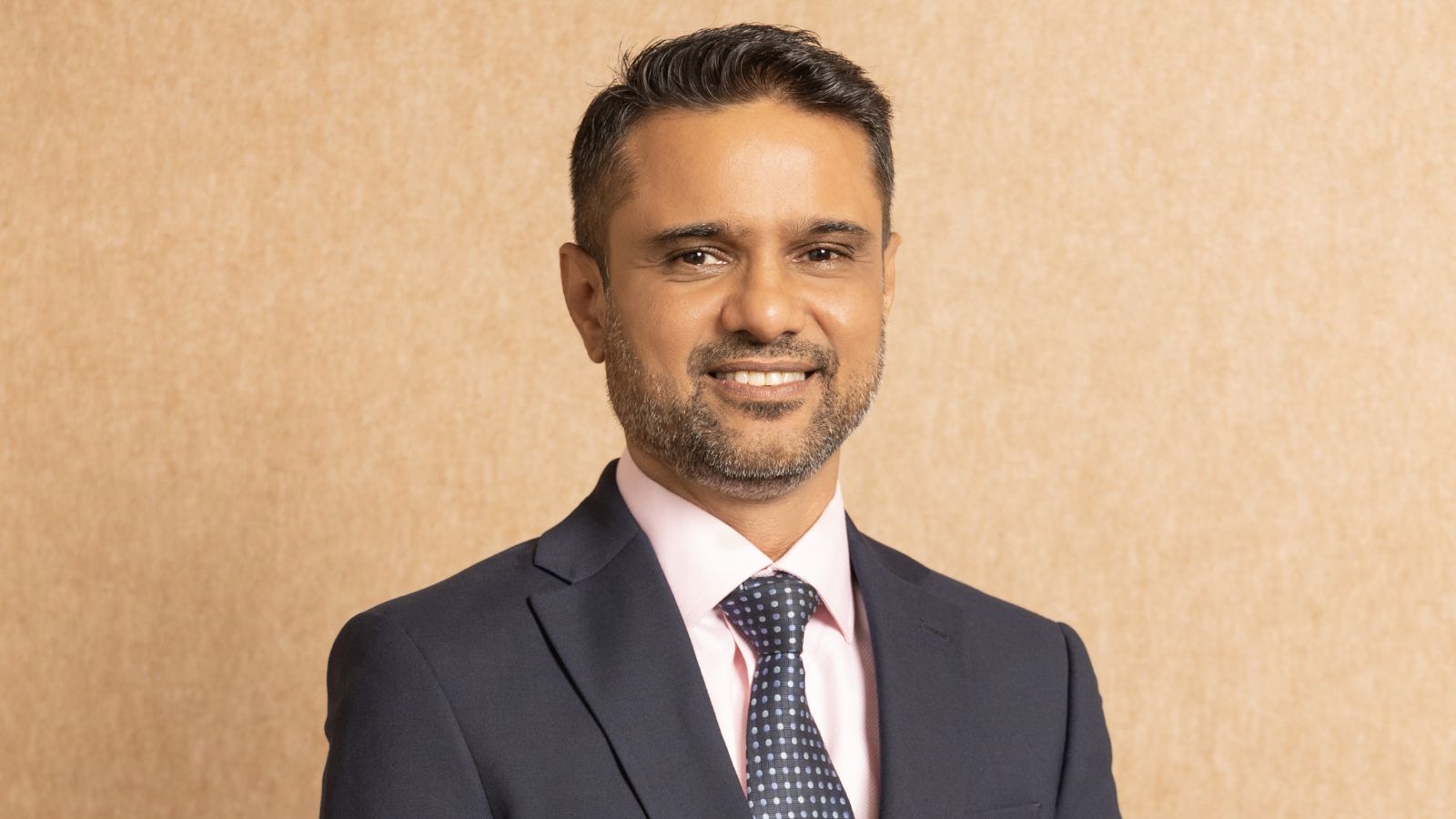
10866333 Sandeep Yadav
- ✓10866333 Sandeep Yadav
- ✓What Donald Trump says and does, the war, and oil prices – these are all more important right now than a growth rate of 7.8%.
- ✓But after that, even a 50-bps rate hike is very much possible because the Governor has been very decisive once he decides what to do.
- ✓In the 25 years that I've been in the markets, there have been so many times that I have felt this is something we have never seen before.
The GDP growth rate ranks “way down” in financial markets’ pecking order of economic indicators, with inflation, government finances, and geopolitics all seen as more important, Sandeep Yadav, Head of Fixed Income at DSP Mutual Fund, told Siddharth Upasani in an interview.
Adding that the 7.8% growth rate for April-June is “stale”, Yadav also voiced concerns about India’s ability to attract foreign money, noting that the “good times are behind us” as far as foreign investment in Indian government debt is concerned.
He also expressed worries about the difficulty the Reserve Bank of India may face when Foreign Currency Non-Resident (Bank) deposits, raised under the swap window, have to be repaid in 2029. Edited excerpts: Another reason why these GDP numbers did not matter much was because we already had an inkling, looking at the tax collection and other data, that the nominal GDP numbers at least are looking fine.
I think it's way down in the order right now, especially for the debt market. It is not something I or the markets discuss that often because there are more pressing issues right now, especially inflation, which is going to be above 5% for some time.
We have seen the RBI also care more about inflation rather than growth. The fiscal deficit this year is much higher in the order than growth because subsidies have spiked due to the war. For the debt market, GDP growth probably ranks lower than geopolitics.
What Donald Trump says and does, the war, and oil prices – these are all more important right now than a growth rate of 7.8%. As far as the debt market is concerned, absolutely yes. And that's why the market is pricing in interest rate hikes.
The market is not expecting rate hikes just because inflation is moving higher – that could be a temporary phase. I am more optimistic and expect it to happen in February. The RBI has not given stark pointers so far; central banks rarely shock and prefer to sensitise the market before taking action after a long pause.
It’s almost four years since the last rate hike, so I would be surprised if there is a rate hike in October. I believe RBI will use the October policy to make the market expect a rate hike in probably December or February; I think (the odds are) it’s 60% in February and 40% in December.
I think by December the US-Iran war may ease off, inflationary pressures may cool, and with the monsoon behind us, we will have more clarity on the inflation situation. We have also seen Governor Sanjay Malhotra generally waiting before he takes strong actions and decisions.
Which is why I believe he may not mind waiting till February. But after that, even a 50-bps rate hike is very much possible because the Governor has been very decisive once he decides what to do. I love the opening of Charles Dickens’ A Tale of Two Cities: ‘It was the best of times, it was the worst of times’.
In the 25 years that I've been in the markets, there have been so many times that I have felt this is something we have never seen before. Yet, somehow, after every couple of years, we see it again: Global Financial Crisis, taper tantrums, demonetisation, Covid.
It’s the same now. I don’t expect a contagion, but I am worried about India, especially foreign inflows, for two reasons. One, we are still not able to garner net inflows. Yes, this year the Balance of Payments surplus is very high, but that’s because of the FCNR(B) deposits.
My second worry is the FCNR(B) deposits themselves. They have helped us this year, but how do we fix the issue next year? Also, these FCNR(B) deposits have to be paid back after 3-5 years. And it’s not just these $130 billion; even before these deposits mature, we have a significant FX forward maturity.
So, the future is worrisome when you have a short forward book of $200 billion, even if reserves are close to $800 billion by then. I think the RBI is also worried because that’s the only reason I can think of why they stopped the FCNR(B) swap scheme early despite saying just two weeks earlier there is no intention to do so.
Structurally, nothing has changed in India to warrant more FX inflows and we have outflows lined up over the next few years. If US yields keep on rising or we see a dislocation in Japan, it's going to be very difficult for India to get money (from abroad) because there'll be a flight to safety the way we saw in 2008 and 2013, and it will be very difficult to even get incremental inflows which we are not able to get anyway.
We were quite lucky in 2016 (when the 2013 FCNR(B) deposits matured) because the result of the 2014 general elections led to bumper forex inflows for the next couple of years. If we get FX inflows, it should not be that difficult this time.
My worry is that we have not seen those flows come for many years… I remain optimistic, but yes, it is something I am sure policymakers would and should be worried about. For FPI investment in debt, absolutely, it’s a pipedream.
India has never been a lucrative market for debt. If I am not mistaken, the last time that India had high FPI holdings as a share of outstanding was in 2013-14. Since then, their share in bonds outstanding has been coming down.
Ever since the RBI came up with the regulation to curtail fully currency hedged debt inflows, we have not seen those numbers.
- •Aspirants and citizens are advised to monitor official notices and circulars issued by Indian Express Economy & Markets.
- •Verify all prescribed eligibility criteria, cutoff dates, and authenticated document requirements prior to formal submissions.
- •Track connected examination timetables, vacancy advisories, and administrative gazettes on SuchnaSetu.
| Issuing Authority | Indian Express Economy & Markets |
|---|---|
| Topic Category | BUSINESS |
| Jurisdiction | All India / National |
| Publication Date | 7 September 2026 |